
Artist
William Morris Prints
The defining textile and wallpaper patterns of the Arts and Crafts movement.
William Morris was a British textile designer, poet, and driving force behind the 19th-century Arts and Crafts movement. Rejecting the poor-quality industrial manufacturing of the Victorian era, Morris championed traditional craftsmanship and patterns heavily inspired by British flora and fauna.…
Era & movement
0 William Morris works
No pieces match this filter combination.
The YourCover Difference
Gallery walls, without the gallery markup.
Museum-quality printing
Archival inks on canvas, acrylic, metal, or fine-art paper — colour-matched to the original.
Made to order for you
Nothing sits in a warehouse. Every piece is printed and finished the day it's ordered.
Preview before you buy
See the exact size, frame, and finish on your wall in real time — no guesswork.
Happiness guaranteed
If a piece doesn't land the way you hoped, we'll make it right — no fuss.
On this collection
The defining textile and wallpaper patterns of the Arts and Crafts movement.
The Design Philosophy of William Morris
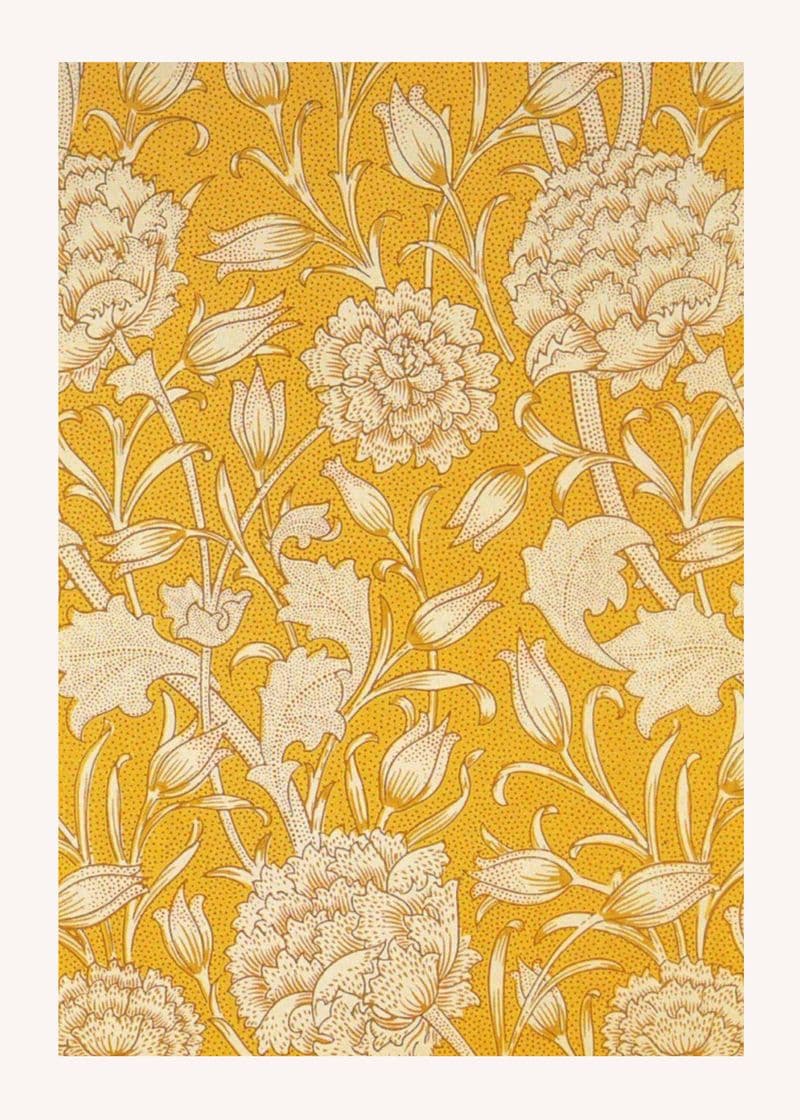
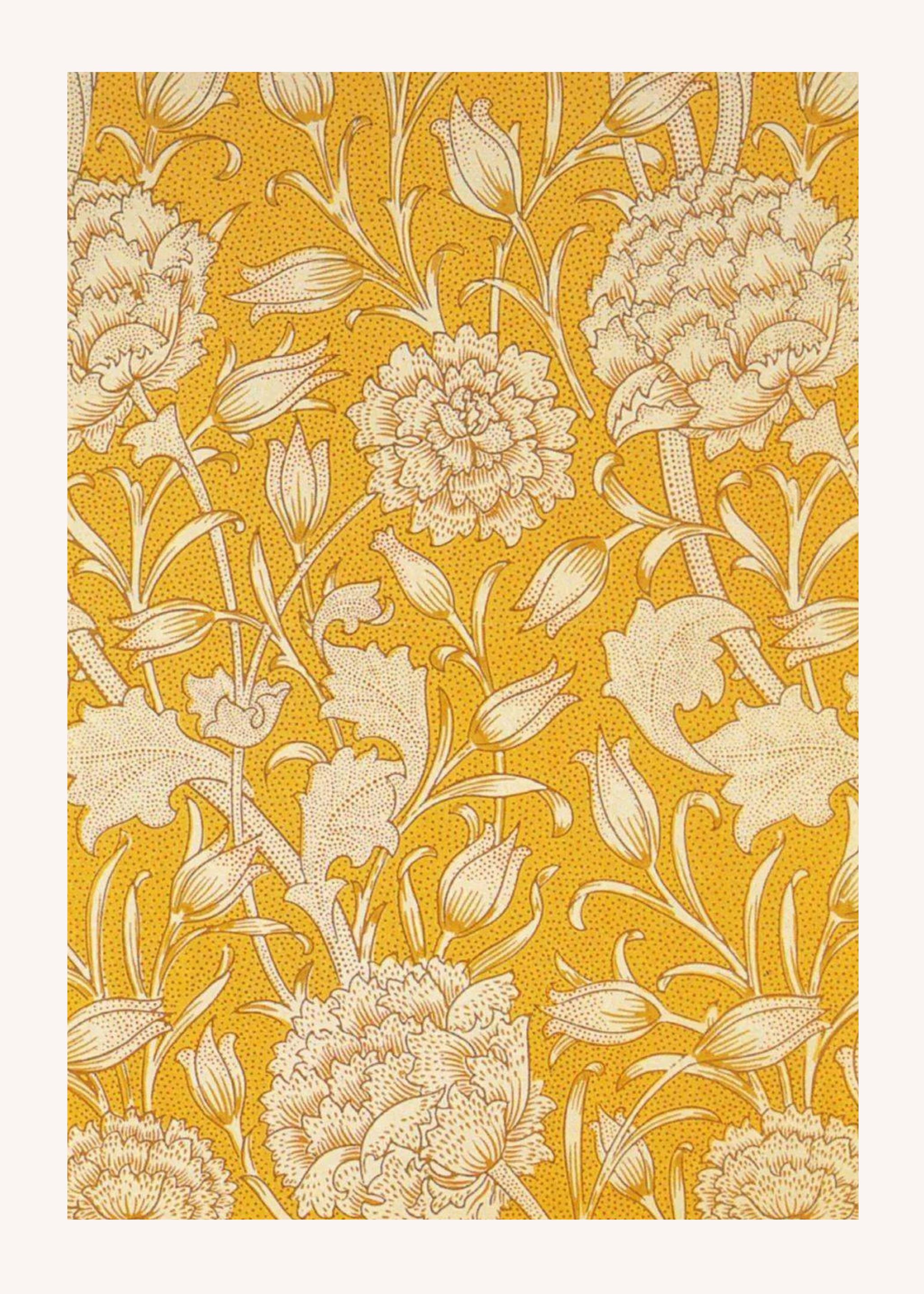
Founded in 1861, Morris & Co. produced wallpaper, textiles, and tapestries designed to bring the natural world into the domestic interior. Morris's patterns, such as "Strawberry Thief," "Willow Boughs," and "Acanthus," are characterized by their mathematical precision masked by organic fluidity. He utilized a technique known as "continuous repeat," where vines, birds, and flowers weave seamlessly into one another without an obvious grid. His color palettes were strictly derived from natural dyes — indigo, madder red, and weld yellow — resulting in rich, slightly muted tones that avoid the harshness of synthetic Victorian colors. Reproducing his work as wall art requires a medium that respects this heritage; matte paper or unvarnished canvas best captures the flat, chalky texture of his original woodblock prints.
Integrating Morris Prints in Modern Decor
While originally intended as edge-to-edge wallpaper, William Morris designs are increasingly used as standalone framed art. This approach allows collectors to introduce the complexity of Arts and Crafts patterns without committing to an entire room of maximalist wallpaper. A large-scale Morris print serves as an excellent anchor in an eclectic or transitional room, pulling together disparate colors from the furniture into a single, cohesive pattern on the wall. For traditional aesthetics, pairing these prints with dark wood frames and wide, textured matting emphasizes their historical origin. In more contemporary spaces, a gallery wall featuring tightly cropped sections of different Morris patterns can modernize the work, focusing the eye on the abstract geometry of his vines and leaves rather than the historical context.
How your print is made
From archive to wall
Digital remastering included
- 01
Source
Each piece comes from a high-resolution museum or curated archive — the kind of original-quality source you'd otherwise only find at the Met or a specialized print dealer.
- 02
Remaster
Before we print, every image is digitally cleaned: scan borders trimmed, color profile adjusted to the chosen medium, resolution matched to your selected size. No museum-scan artifacts make it onto your wall.
- 03
Print
Pigment inks on archival material in our LA studio. Quality-checked, packaged flat or rolled depending on size, shipped ready to hang within 5–7 business days.
Same art, your surface
William Morris on every medium
Keep exploring
If you like William Morris, you'll like…

Buy with confidence
Sizing & hanging guide
- 1
Measure your wall
Width and height of the open space, edge to edge.
- 2
Take 2/3 of it
Art should fill about two-thirds of the available width.
- 3
Match the orientation
Tall walls take portrait; wide walls take landscape.
- Hang centre at 57–60" from the floor — eye level.
- Leave 3–6" between a frame and furniture below it.
- For a group, treat the cluster as one shape.
- Bigger reads as more expensive; don't under-size.
FAQ
Frequently asked
Our William Morris prints are high-fidelity digital reproductions of the original 19th-century wallpaper and textile designs held in public and museum archives. They are printed using modern archival inks to capture the exact colors, block-registration marks, and historical aging of the original source material.
The Arts and Crafts movement was a late 19th-century design trend that reacted against the poor quality of the Industrial Revolution. Led by Morris, it advocated for traditional craftsmanship, simple forms, and romantic, nature-inspired patterns, emphasizing that functional household items should be beautiful and made by skilled artisans.
Because the original patterns were carved into large wooden blocks and stamped by hand onto paper or fabric, they contain inherent human inconsistencies. You may notice slight color overlaps, uneven ink distribution, or subtle texture in the reproduction. These "flaws" are intentionally preserved to maintain the authenticity of the hand-blocked technique.
Framed paper is the most historically accurate choice, as it mimics the original wallpaper formats and provides a sharp, crisp edge to the intricate linework. Canvas offers a softer, more textile-like appearance, which works well if the specific Morris pattern you chose was originally designed as a woven tapestry or upholstery fabric.